This guide explains how Worldline Issuing supports banks, fintech companies, retailers, and other institutions in designing, launching, and managing payment card programmes. It examines issuing infrastructure, digital and physical cards, authorization, tokenization, compliance, security, implementation, commercial considerations, and operational oversight. Worldline is a European payments technology provider, while the precise services, markets, scheme relationships, and contractual terms available through its issuing offering depend on jurisdiction and programme design.

Worldline Issuing refers to the payment-card issuing capabilities, technology, processing services, and operational support provided through Worldline’s broader payments infrastructure. In practical terms, it can help an eligible institution create and operate a card programme without building every component internally. Depending on the market, product structure, and contract, this may include card-product configuration, account and card lifecycle management, transaction authorization, fraud controls, tokenization support, digital-wallet enablement, settlement-related processing, reporting, and operational services.
The important point for decision-makers is that issuing is not simply the production of a plastic card. A functioning programme connects a cardholder, an issuer, a payment network, an authorization platform, a processor, a personalization partner, a digital wallet, and a set of regulatory and risk controls. Worldline Issuing should therefore be assessed as part of an end-to-end operating model rather than as an isolated software feature.
Worldline’s exact capabilities are not identical in every country. Availability may be affected by local licensing arrangements, scheme membership, data-residency rules, product type, currency, card scheme, risk appetite, and the role Worldline is expected to perform. A bank, electronic-money institution, fintech, marketplace, or retailer should confirm the relevant service scope directly during procurement and due diligence.
There is also an important distinction between a service that provides technical processing and a structure in which a regulated institution acts as the issuer of record. A provider may process transactions, maintain card records, connect to schemes, or operate selected customer-service functions without becoming the legal issuer in every arrangement. The legal, financial, and customer-facing responsibilities should be documented in advance.
In the payments industry, the issuer is the institution that provides a payment card or payment credential to a customer and maintains the associated account or relationship. The issuer determines whether a transaction should be approved, declined, or referred for additional checks. It also manages card status, customer authentication, disputes, statements, limits, replacement cards, and other responsibilities connected with the programme.
Issuing can involve several distinct layers:
A provider such as Worldline may deliver some of these layers directly and coordinate others through partners. The correct interpretation depends on the specific product documentation and service agreement. Buyers should distinguish between a technical platform, a processing service, a regulated issuing arrangement, and a managed programme. These are related but not interchangeable concepts.
Issuing is also a continuing operational responsibility. The initial launch is only one stage in the programme lifecycle. Once cards are active, the institution must manage renewals, expired credentials, dormant accounts, fraud investigations, chargebacks, customer complaints, scheme updates, regulatory changes, and technology releases. A solution should therefore be evaluated for long-term manageability, not only for how quickly it can create the first card.
Institutions usually evaluate an issuing provider when they want to launch or modernize a card programme while controlling complexity, implementation time, and operational exposure. A provider with experience across acquiring, issuing, digital payments, and merchant services may offer a broader view of transaction flows. That perspective can be useful when a programme must connect card payments with banking applications, loyalty systems, commerce platforms, or embedded-finance journeys.
Worldline’s European market presence may be relevant to organizations that require a provider familiar with regional payment practices and regulatory expectations. However, geographic presence should not be treated as evidence that every service is available in every jurisdiction. A procurement team should ask where processing occurs, which entity signs the contract, which regulated responsibilities remain with the client, and how cross-border support is organized.
Potential reasons to assess Worldline Issuing include:
These benefits are not automatic. They depend on integration quality, governance, data quality, programme design, service levels, and the client’s own operating capabilities. A strong provider cannot compensate for unclear ownership, incomplete compliance controls, or poorly defined customer journeys.
There may also be strategic benefits from reducing the number of separate vendors involved in the payment chain. Fewer operational interfaces can simplify escalation and reporting. At the same time, concentration with one provider can create dependency risk. The buyer should compare the convenience of an integrated relationship with the resilience and flexibility that may result from a multi-provider design.
Card configuration determines how a product behaves in the market. The programme owner may need to define whether the card is debit, prepaid, credit, charge, virtual, physical, single-use, consumer, commercial, or designed for a particular spending purpose. Other parameters may include supported currencies, geographic restrictions, merchant-category controls, contactless settings, cash-withdrawal permissions, recurring-payment treatment, and replacement policies.
Configuration should be approached as a governance exercise rather than a purely technical task. Every rule can influence customer experience, fraud exposure, operational workload, and regulatory obligations. For example, a restrictive cash-withdrawal policy may reduce certain risks but create service issues for travelers or customers who rely on cash access. Similarly, a highly flexible virtual-card product may support digital commerce but require stronger controls for account takeover and credential misuse.
Product design should include the full commercial model. Fees may apply to issuance, replacement, foreign transactions, cash withdrawals, expedited delivery, account maintenance, or particular services. The institution must ensure that customer disclosures match the actual system behavior. If a product advertises flexible controls, real-time notifications, or no-fee usage, those claims should be tested against the operational configuration and contractual limitations.
Digital cards can be created within an application or online account and may become usable soon after eligibility and security checks are completed. Physical cards require additional steps, such as manufacturing, personalization, packaging, delivery, activation, and replacement management. An issuing solution should allow the programme owner to coordinate these channels without creating contradictory card states.
Important questions include whether a digital card can be issued before the physical card arrives, how a card is suspended across all channels, how a replacement affects wallet tokens, and how customers are notified of status changes. A modern card programme should also provide a clear experience when a cardholder changes a device, reports a lost card, or requests a new card after suspected compromise.
Physical-card logistics can materially affect customer satisfaction. Delivery failures, incorrect addresses, damaged cards, and delayed personalization require defined procedures. The programme should establish how undelivered cards are returned, how address changes are authenticated, and how a card is securely destroyed if it cannot be delivered. These details are operationally ordinary but strategically important because they affect activation rates and support costs.
Authorization is the point at which a transaction request is evaluated. The process may consider available balance, credit exposure, card status, merchant category, location, transaction amount, velocity, authentication data, risk signals, and programme-specific rules. A decision may be approved, declined, or routed for further review, depending on the capabilities and operating model.
Authorization performance affects both revenue and customer trust. A false decline can interrupt a legitimate purchase, while an overly permissive decision can increase losses. Industry professionals therefore assess not only processing speed but also rule transparency, exception handling, monitoring tools, and the ability to refine decision logic without destabilizing the programme.
Decisioning should also account for different transaction environments. Card-present transactions, ecommerce payments, recurring payments, mobile-wallet transactions, cash withdrawals, and account verification requests can present different data and risk profiles. A programme that uses one undifferentiated rule set may either block too many legitimate payments or fail to address important forms of fraud.
Tokenization replaces a payment-card number with a substitute credential for a particular device, wallet, merchant, or transaction context. The substitute credential can reduce the exposure of the underlying card number, although it does not remove the need for strong authentication, device security, fraud monitoring, and careful lifecycle management.
In an issuing environment, token-related activities may include provisioning, verification, suspension, replacement, lifecycle updates, and support for major digital-wallet ecosystems. Programme owners should clarify which wallet services are supported, how customer verification works, what data is exchanged, and how a token behaves when the physical or underlying digital card is replaced.
Token lifecycle management is particularly important during fraud events. Suspending a physical card may not be sufficient if active wallet tokens remain usable. Conversely, replacing every token unnecessarily can create friction for customers who have not been affected. The issuer and processor should agree on the operational rules for token suspension, reactivation, device changes, and emergency actions.
Fraud management is a continuing process, not a single product setting. A Worldline Issuing programme may incorporate configurable controls around transaction amount, frequency, merchant category, geography, card-present status, digital-commerce indicators, authentication outcomes, and unusual behavioral patterns. The precise controls available will depend on the service design.
A responsible risk framework balances prevention with customer access. Excessive blocking may damage the programme’s reputation and increase call-center demand. Insufficient controls may result in financial loss, regulatory scrutiny, and customer dissatisfaction. A professional implementation should establish measurable objectives, escalation paths, alert ownership, investigation procedures, and a process for reviewing control effectiveness.
Fraud controls should be differentiated by customer segment and product purpose. A corporate travel card may reasonably exhibit higher international activity than a domestic consumer debit card. A single-use virtual card may have a short validity period and a different velocity profile from a recurring subscription card. Segment-specific analysis can improve both fraud detection and approval performance.
A bank may use an issuing platform to support everyday debit cards, premium products, youth accounts, travel cards, or specialized customer segments. The value lies in connecting card management with the bank’s account systems, mobile application, customer authentication, and service channels. The bank remains responsible for ensuring that product terms, customer communications, and regulatory processes are appropriate for the market.
Retail banks may also use issuing modernization to improve self-service. Customers could freeze and unfreeze cards, request replacement cards, set spending limits, manage travel preferences, or view transaction details through a digital channel. These capabilities require reliable synchronization between the issuing processor and the bank’s customer-facing systems. A control shown in the application should reflect the actual authorization behavior, and changes should be traceable for support and audit purposes.
A fintech may seek issuing capabilities to launch a payment account, expense product, remittance service, or embedded-card experience. Such organizations often prioritize APIs, digital onboarding, rapid status changes, real-time notifications, and automated operational workflows. The provider assessment should pay close attention to account ownership, safeguarding arrangements, customer identification, transaction monitoring, and the division of responsibilities between the fintech and its issuing partner.
Fintechs should avoid assuming that an API-first experience eliminates operational obligations. Automated onboarding can still produce false matches, incomplete documentation, or customers who require manual review. A digital card can still generate disputes, fraud cases, delivery questions, and regulatory complaints. The operating model should include human support, exception queues, quality controls, and documented escalation channels.
Businesses may use card programmes to manage employee spending, procurement, travel expenses, project budgets, or controlled payments to suppliers. Commercial programmes require more than a card number. They may need user roles, approval chains, department limits, merchant restrictions, receipt collection, accounting exports, and detailed reporting.
For this segment, the quality of data can be as important as the payment decision itself. A transaction that is approved but cannot be reconciled to the correct employee, project, tax category, or cost center creates administrative work. Buyers should evaluate reporting fields, export formats, API documentation, and integration with enterprise-resource-planning or expense-management systems.
Commercial programmes also need clear authority structures. An administrator may create a card, a manager may approve a spending limit, an employee may use the card, and a finance team may reconcile the transaction. Each role should have appropriate permissions, authentication, audit trails, and separation of duties.
A retailer or platform may integrate a card product into an existing customer relationship. The card could be connected to loyalty benefits, marketplace spending, subscription management, or a branded financial experience. This model requires careful separation between marketing claims and regulated payment obligations. The customer must understand who provides the account, who handles complaints, who protects funds where applicable, and who is responsible for transaction disputes.
Embedded-finance programmes should also consider how the card relationship affects the primary brand. A poor payment experience may be attributed to the retailer or platform even when a third party operates the processing. Contracts should therefore address customer communications, brand standards, incident notices, service recovery, and cooperation during high-impact events.
Travel-related programmes may involve several currencies, foreign transactions, cash access, dynamic spending controls, and travel notifications. Issuing design should account for exchange-rate disclosures, authorization behavior when connectivity is limited, merchant verification, and customer support across time zones. Claims about exchange rates, coverage, or acceptance should be based on the actual programme terms rather than general assumptions about the provider.
Multi-currency products also require careful ledger design. The programme should explain how balances are held, when conversions occur, how refunds are calculated, and how exchange-rate differences appear in customer statements. Support teams need suitable tools to investigate transactions that cross currencies, time zones, and settlement dates.
The technical architecture determines how efficiently an issuing programme can be launched and maintained. A typical environment may contain a customer-facing application, an account ledger, an issuing processor, a card-network connection, a wallet-token service, a fraud engine, a customer-service platform, a card-personalization provider, and reporting or reconciliation systems.
Before selecting a provider, the technical team should map the complete transaction and lifecycle paths. At a minimum, this includes:
API availability is important, but API availability alone does not guarantee integration quality. The buyer should review authentication methods, versioning, rate limits, idempotency, error responses, event notifications, sandbox behavior, test data, and operational support. Documentation should explain what happens when a request is duplicated, delayed, partially completed, or rejected by a downstream service.
Event-driven integration can help applications respond to card creation, authorization, settlement, dispute, and status events. Nevertheless, event systems require robust retry logic, reconciliation, monitoring, and clear treatment of out-of-order messages. A programme should maintain an authoritative record of account and card status rather than relying solely on front-end notifications.
Legacy integration is another consideration. A bank or established institution may have systems that use batch files, older message formats, or overnight processing. A modern issuing service must be evaluated against the institution’s actual architecture rather than an idealized future state. Transitional designs may need both real-time APIs and controlled batch interfaces.
Payment issuing is a regulated and security-sensitive activity. The relevant obligations vary by jurisdiction and product. They may include customer identification, anti-money-laundering controls, sanctions screening, data protection, safeguarding or capital requirements, consumer disclosures, complaint handling, operational resilience, outsourcing oversight, and payment-card security standards.
The Payment Card Industry Data Security Standard, maintained by the PCI Security Standards Council, is a central reference for organizations that store, process, or transmit payment-account data. The applicable compliance responsibilities depend on the organization’s role and technical environment. A service provider’s compliance status does not automatically eliminate the client’s own obligations.
European programmes may also need to consider the revised Payment Services Directive framework, national implementation rules, strong customer-authentication requirements, the General Data Protection Regulation where applicable, and financial-sector outsourcing expectations. The exact legal analysis should be performed by qualified counsel and compliance professionals familiar with the target market.
From an expert perspective, governance should be documented before launch. The programme should identify:
Security should extend beyond encryption. Access management, privileged-user controls, secrets management, secure software development, vulnerability remediation, network segmentation, logging, incident response, and employee awareness all contribute to programme resilience. A buyer should request appropriate assurance documentation and understand the scope and limitations of each certification or independent assessment.
Third-party risk deserves particular attention. Card personalization, delivery, cloud infrastructure, fraud analytics, wallet services, call-center operations, and data storage may involve multiple subcontractors. The client should know which parties are involved, where they operate, what controls apply, and how the client will be informed about material changes.
A staged implementation usually reduces avoidable risk. The following sequence is a practical framework for evaluating and launching a Worldline Issuing programme. The exact sequence may change according to the client’s regulatory status, product type, and integration model.
Document the intended customer segment, card type, currencies, countries, channels, expected transaction patterns, funding model, and service proposition. Define what the card can and cannot do. Include replacement, closure, refund, dispute, and customer-support scenarios from the beginning.
Determine which entity will issue the card, which permissions are required, and which services must be supplied by a regulated partner. Review scheme rules, data-protection requirements, outsourcing terms, consumer obligations, and any restrictions associated with the selected country or product.
Create a responsibility matrix covering onboarding, authorization, fraud, settlement, reconciliation, customer service, disputes, incident response, and reporting. Avoid vague language such as “managed by the provider” unless the contract explains the precise tasks, response times, dependencies, and escalation procedures.
Map onboarding, card creation, activation, wallet provisioning, payment approval, decline messaging, card suspension, replacement, and complaint handling. Test the journey for accessibility, language, device compatibility, and customers who encounter incomplete or conflicting information.
Connect the issuing platform with the customer application, account ledger, identity services, fraud controls, wallet services, reporting tools, and support systems. Establish secure credentials, test environments, logging, alerting, and reconciliation routines. Treat operational dashboards as part of the implementation rather than as a later enhancement.
Testing should cover standard approvals and declines, partial approvals where relevant, reversals, refunds, duplicate messages, offline scenarios, recurring transactions, cash withdrawals, card replacement, wallet-token changes, and dispute flows. Security testing should include authentication, authorization, access control, input validation, and incident procedures.
Operational testing should involve the teams that will actually support the programme. A customer-service script may appear complete until an agent must explain a pending transaction, a reversed authorization, an unfamiliar merchant name, or a delayed refund. Including support staff in testing helps identify gaps that technical testing alone may miss.
A pilot can expose issues in customer communication, card delivery, transaction categorization, fraud rules, reporting, and support procedures. Pilot participants should represent the intended audience but operate within clearly defined risk and transaction limits.
After launch, review authorization performance, decline reasons, fraud alerts, customer contacts, card activation, wallet enrollment, delivery performance, reconciliation exceptions, and complaints. Early monitoring should be frequent enough to identify defects before they affect a large customer population.
Changes to limits, risk rules, card designs, customer messaging, and integrations should follow change-management controls. Every change should have an owner, rationale, test evidence, release plan, rollback method, and post-release review.
Pricing for issuing services is typically shaped by programme complexity, transaction volumes, card types, countries, currencies, personalization, digital-wallet requirements, support coverage, compliance responsibilities, and integration scope. Publicly available headline pricing should not be assumed to represent the total cost of ownership. A formal proposal should separate recurring platform charges, transaction-related fees, card production, delivery, scheme costs, wallet services, dispute handling, implementation, support, and optional modules.
Procurement teams should request a transparent pricing model that explains volume bands, minimum commitments, implementation charges, pass-through costs, currency treatment, service credits, and change-order procedures. It is also sensible to model several scenarios, including lower-than-expected adoption, rapid growth, increased fraud activity, and a second-country launch.
Contract terms deserve equal attention. Important areas include service availability, incident notification, recovery objectives, data ownership, audit rights, subcontractors, confidentiality, termination assistance, portability, regulatory cooperation, liability allocation, and business continuity. A programme can become difficult to migrate if card records, token relationships, transaction history, or customer communications are not exportable in a usable format.
Buyers should also distinguish between a service-level commitment and a business outcome. A platform may meet its uptime target while the overall programme experiences delivery delays, reconciliation failures, or customer-service backlogs caused by another component. Service-level definitions should therefore cover the complete chain where possible, or at least identify dependencies and responsibilities clearly.
Commercial due diligence should include the cost of internal resources. A managed service may reduce infrastructure development while still requiring product managers, compliance officers, fraud analysts, finance specialists, customer-service staff, integration engineers, and vendor managers. A realistic business case includes these roles and the continuing cost of governance.
| Approach | Typical Strengths | Potential Limitations | Top Suited To |
|---|---|---|---|
| Worldline Issuing or a comparable managed issuing service | Access to established processing capabilities, operational support, card-lifecycle functions, and potential connectivity across payment services | Service scope, regulatory model, integration options, and commercial terms vary by market and contract | Institutions seeking a structured partner for a regulated or complex card programme |
| In-house issuing platform | High control over architecture, data flows, decisioning, and product development | Requires significant engineering, compliance, operations, security, scheme, and resilience capabilities | Large institutions with mature internal payment infrastructure |
| Specialist issuing processor | Focused card-programme tooling, APIs, and potentially faster product configuration | May require separate providers for banking, compliance, card production, wallets, and operational support | Fintechs and product teams prioritizing focused issuing functionality |
| Bank-led programme partnership | Potential access to regulated issuing arrangements, banking expertise, and established customer processes | Product flexibility, ownership, timelines, and technology integration may be constrained | Organizations that need a regulated sponsor and prefer a partnership model |
| Multi-provider architecture | Ability to select specialized providers for ledger, issuing, fraud, wallets, and customer experience | Greater integration effort, more complex accountability, and increased reconciliation requirements | Organizations with strong technology governance and integration expertise |
The table is a strategic comparison rather than a product recommendation. A suitable model depends on the institution’s authorization, risk appetite, technical maturity, target market, and operating plan.
Issuing programmes need a balanced measurement framework. Focusing only on transaction approval rates can hide problems in delivery, activation, customer support, or reconciliation. Recommended measurement areas include:
Metrics must be interpreted carefully. A rising approval rate may reflect better decisioning, but it could also indicate weaker controls. A decline in customer contacts may suggest improved experience, or it may mean that customers cannot reach support. Expert analysis combines quantitative measures with case reviews, customer feedback, internal audit findings, and trend comparisons.
Projects often stall when the client assumes the provider owns a task that legally or operationally remains with the client. The remedy is a detailed responsibility matrix supported by process diagrams, contractual language, and named owners.
Card programmes generate information across authorization, clearing, settlement, disputes, customer profiles, and fraud systems. Missing or inconsistent identifiers can undermine reconciliation and reporting. Data mapping should be completed before build work is finalized and tested with realistic transaction scenarios.
Default fraud, limit, and notification settings may not reflect the target customer base. Rules should be reviewed against expected transaction behavior, customer geography, merchant categories, and the organization’s risk appetite.
Successful payments are usually straightforward; operational resilience is tested by unusual events. A strong design explains what happens when a message is duplicated, a wallet token fails, a customer disputes a transaction, a settlement file is delayed, or a downstream system becomes unavailable.
Even when a good relationship is expected, exit planning is prudent. The contract and technical design should address data export, customer communication, card replacement, token migration, open disputes, settlement completion, and regulatory record retention.
A programme that begins with one card and one country may gradually add virtual cards, commercial users, multiple currencies, wallet services, and additional markets. Each expansion can introduce new scheme, compliance, fraud, support, and data requirements. A formal change process helps prevent the programme from becoming more complex than its governance can support.
Organizations researching Worldline Issuing should consult the provider’s current product documentation, legal terms, security materials, and regional service descriptions. These should be read alongside authoritative industry frameworks rather than relying on promotional summaries alone.
These sources serve different purposes. Provider documents explain the commercial and technical offering. Standards bodies describe security or interoperability frameworks. Regulators define legal expectations. Scheme documentation sets network rules. A complete assessment requires all four perspectives.
Before approving a programme, an institution should confirm the following conditions:
These conditions do not replace legal or regulatory advice. They provide a practical readiness checklist for programme owners, technology teams, risk officers, procurement leaders, and operations managers.
From an industry perspective, Worldline Issuing may be appropriate for an organization that values an established payments partner and requires more than a basic card-creation interface. It may be especially relevant when the programme needs a combination of issuing processing, digital-payment support, operational coordination, and access to a provider with experience in European markets.
The strongest fit is likely to occur when the buyer has a clearly defined product, an accountable regulated structure, realistic implementation resources, and a willingness to participate in governance. The weakest fit may occur when an organization expects a provider to resolve an undefined business model, substitute for internal compliance ownership, or deliver complex functionality without meaningful integration work.
Selection should therefore be based on evidence. A buyer should review a service description, implementation plan, sample reports, security documentation, operational procedures, reference architecture, commercial model, and contract terms. Demonstrations are useful, but they should be followed by scenario-based testing that reflects the organization’s actual customer journeys and risk profile.
The decision should also reflect strategic time horizons. A provider that is suitable for a controlled domestic launch may not automatically be suitable for a multi-country expansion. Conversely, a highly complex architecture may be unnecessary for a focused single-product programme. The right level of capability is the one that supports foreseeable needs without introducing disproportionate cost or governance burden.
Issuing continues to evolve as customers expect fast digital experiences, mobile-wallet integration, clearer transaction information, and more personalized controls. At the same time, institutions face greater scrutiny over resilience, data handling, fraud prevention, and third-party risk. The next generation of issuing programmes will likely depend on how effectively providers combine automation with accountable human oversight.
Artificial intelligence and advanced analytics may support fraud detection, customer-service triage, and operational forecasting, but their use should be governed carefully. Models require quality data, performance monitoring, explainability appropriate to the use case, bias assessment, security controls, and a clear process for human review. Automation should improve decisions without obscuring responsibility.
Open banking, account-to-account payments, embedded finance, and digital identity may also affect the role of cards. These developments do not make issuing irrelevant; instead, they encourage institutions to design payment products around broader customer needs. A card may become one credential within a wider account, commerce, loyalty, and identity ecosystem.
Sustainability may also become more prominent in card-programme decisions. Buyers can assess card materials, packaging, delivery methods, replacement rates, and the environmental effects of unnecessary physical production. Such considerations should be balanced with durability, security, accessibility, and regulatory requirements. The most effective sustainability improvements may come from better lifecycle management and reduced replacement demand rather than from card material alone.
Worldline Issuing is a general term for Worldline-related services and infrastructure that support the creation and operation of payment-card programmes. Depending on the market and contract, the scope may include card-lifecycle management, transaction authorization, digital cards, tokenization, fraud controls, reporting, and operational support. The precise offering must be confirmed for the relevant jurisdiction and programme.
A programme may support physical cards through card-production and personalization arrangements, but the exact process depends on the selected service model. Buyers should confirm who manufactures, personalizes, packages, delivers, activates, replaces, and securely destroys cards.
Digital or virtual-card support may be available for eligible programmes. The organization should confirm card types, provisioning methods, customer authentication, wallet compatibility, token-lifecycle processes, and restrictions that apply to the target country and product.
No assumption should be made. The regulated issuer may be the client, a sponsoring bank, a licensed electronic-money institution, or another approved entity, depending on the structure. The contract and regulatory analysis should identify the responsible legal entity and each party’s obligations.
A fintech may be able to use relevant issuing services if it satisfies commercial, technical, compliance, and regulatory requirements. The feasibility depends on the fintech’s business model, customer geography, funding arrangements, product design, licensing position, and integration capacity.
There is no universal timeline. Duration depends on product complexity, licensing, scheme onboarding, integrations, card design, testing, security review, data migration, and operational readiness. A simple programme and a multi-country programme can have very different delivery requirements.
Budgeting should include implementation, platform services, transaction processing, card manufacturing, personalization, delivery, scheme charges, digital-wallet functions, fraud tools, support, disputes, reporting, compliance work, and internal staffing. A detailed proposal is necessary because costs vary by product and volume.
Issuing concerns the institution and customer that use a payment card. Acquiring concerns the merchant side that accepts card transactions and receives processing services. A company may work with both issuing and acquiring providers, but the responsibilities, transaction flows, risks, and operational requirements are different.
No. Tokenization can reduce exposure of the underlying card number in certain environments, but fraud can still involve account takeover, stolen devices, social engineering, compromised merchant accounts, or misuse of legitimate credentials. Tokenization should operate alongside authentication, monitoring, customer education, and incident response.
Testing should cover onboarding, card creation, activation, wallet provisioning, approvals, declines, reversals, refunds, recurring payments, cash access where applicable, card replacement, fraud alerts, disputes, settlement, reconciliation, reporting, outages, duplicate messages, and customer notifications.
Migration may be possible, but it can be complex. The initial contract and architecture should address data export, card and account identifiers, transaction history, token relationships, open disputes, customer communication, settlement completion, and regulatory records. Exit planning is most effective when performed before launch.
Worldline Issuing should be understood as part of a wider payment-programme ecosystem rather than as a standalone card-production service. Its potential value lies in coordinating issuing technology, authorization, card-lifecycle management, digital-payment capabilities, security controls, reporting, and operational support. Whether it is the right choice depends on the institution’s regulatory structure, target market, product strategy, technical requirements, risk framework, and commercial expectations.
A disciplined evaluation begins with scope and accountability. The buyer should establish who issues the card, who owns the customer relationship, which services are included, how data moves through the architecture, how risks are controlled, and how performance will be measured. It should then validate the proposal through technical testing, operational scenarios, legal review, security due diligence, and transparent commercial analysis.
For banks, fintechs, retailers, and other organizations planning a payment-card programme, the central lesson is straightforward: successful issuing depends on the complete operating model. A capable technology partner can simplify that model, but durable results still require sound governance, careful integration, regulatory discipline, and continuous oversight.
Striking the Perfect Balance: Navigating Premiums and Out-of-Pocket Expenses in Senior Insurance Plans

Explore the Tranquil Bliss of Idyllic Rural Retreats

How to Make Lasting Memories at Disneyland Attractions

Affordable Phones and Plans for Seniors

Affordable Full Mouth Dental Implants Near You

Unlock the Top Kept Secrets to Finding Your Ideal Dentist for Flawless Dental Implant Results!

Discovering Springdale Estates

Unveiling RS Sul Telecom Services

The Guide to Car Trading


Maximizing Benefits with Cash Rewards Cards
This comprehensive guide explores the nuances of using Cash Rewards Cards to maximize financial benefits. With a focus on how consumers can harness these cards for cost-efficiency, the article provides an in-depth examination of their functionality, various reward structures, and strategies to optimize their use. Featuring professional insights, the piece serves as a detailed resource for anyone looking to enhance their purchasing power through strategic card usage.

The Comprehensive Guide to Cash Rewards Card
Discover how a Cash Rewards Card can transform your spending habits and financial health. These cards offer users points for money spent, which can be redeemed for cash. Utilizing a rewards card effectively can bring significant benefits, but understanding the terms, fees, and management practices is essential for maximizing rewards and avoiding debt.

Understanding Calcard Sinop for Industrial Supply Decisions
This guide explains how Calcard Sinop fits into industrial procurement decisions, focusing on how buyers compare supplier options, specification compatibility, and delivery reliability. The background sections objectively define what the term typically refers to in supply contexts and why sourcing discipline matters. Readers also get practical criteria for evaluating offers and a detailed FAQ for smoother, risk-aware purchasing.
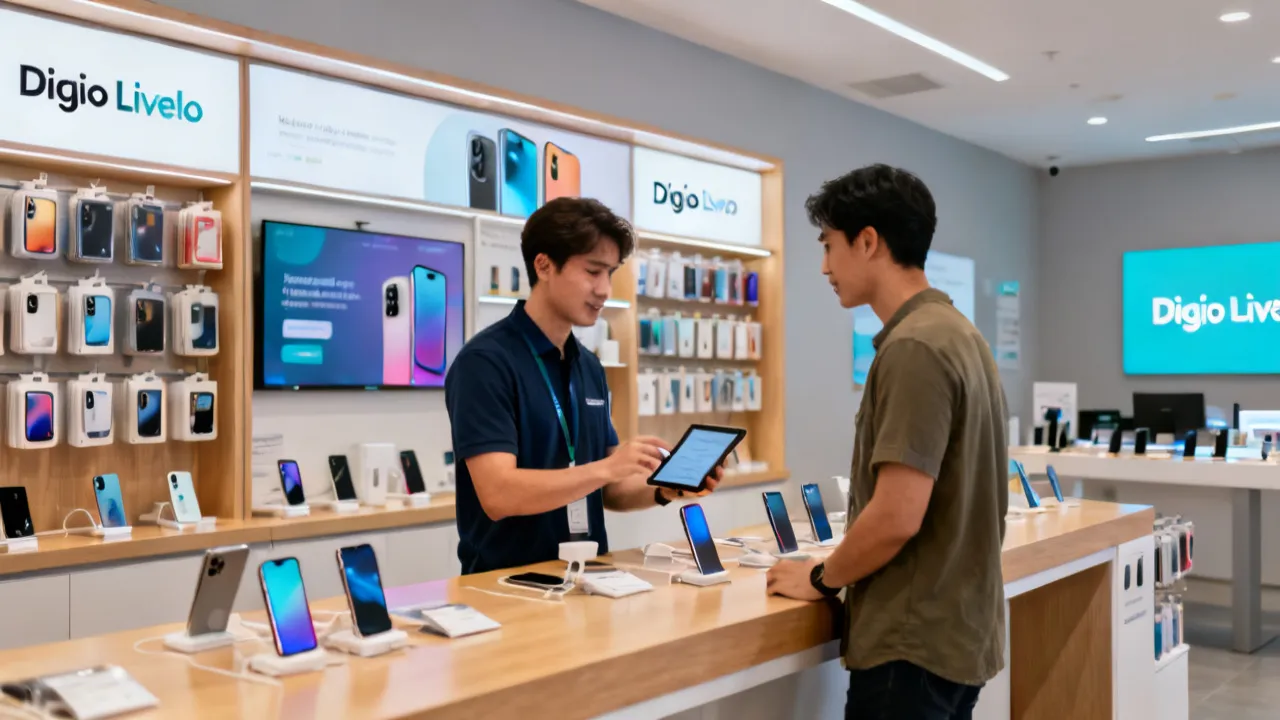
Understanding Digio Livelo: Pricing, Suppliers, and Use Cases
This guide explains how Digio Livelo works in practice, focusing on pricing structure, supplier relationships, and what to expect when evaluating offers. It also provides objective background on common loyalty-to-reward ecosystems, typical procurement and compliance steps, and how businesses compare options without assuming outcomes.

Calcard Sinop: Industry Overview and Sourcing Guide
Calcard Sinop products are evaluated here as a practical sourcing and compliance guide. The article objectively explains what “Calcard Sinop” commonly refers to in commerce and supply contexts, outlines selection criteria, discusses supplier considerations and procurement conditions, and provides a comparison table, step-by-step checklist, and FAQs to help buyers make defensible decisions.

Calcard Sinop: Buying Guidance and Industry Context
Calcard Sinop products are evaluated here for informed selection, focusing on usage suitability, documentation, and supplier credibility. Then the guide offers an objective background on what “Calcard Sinop” typically refers to in medical supply and product ecosystems, clarifying how professionals compare specifications, compatibility, and traceability across sourcing options.